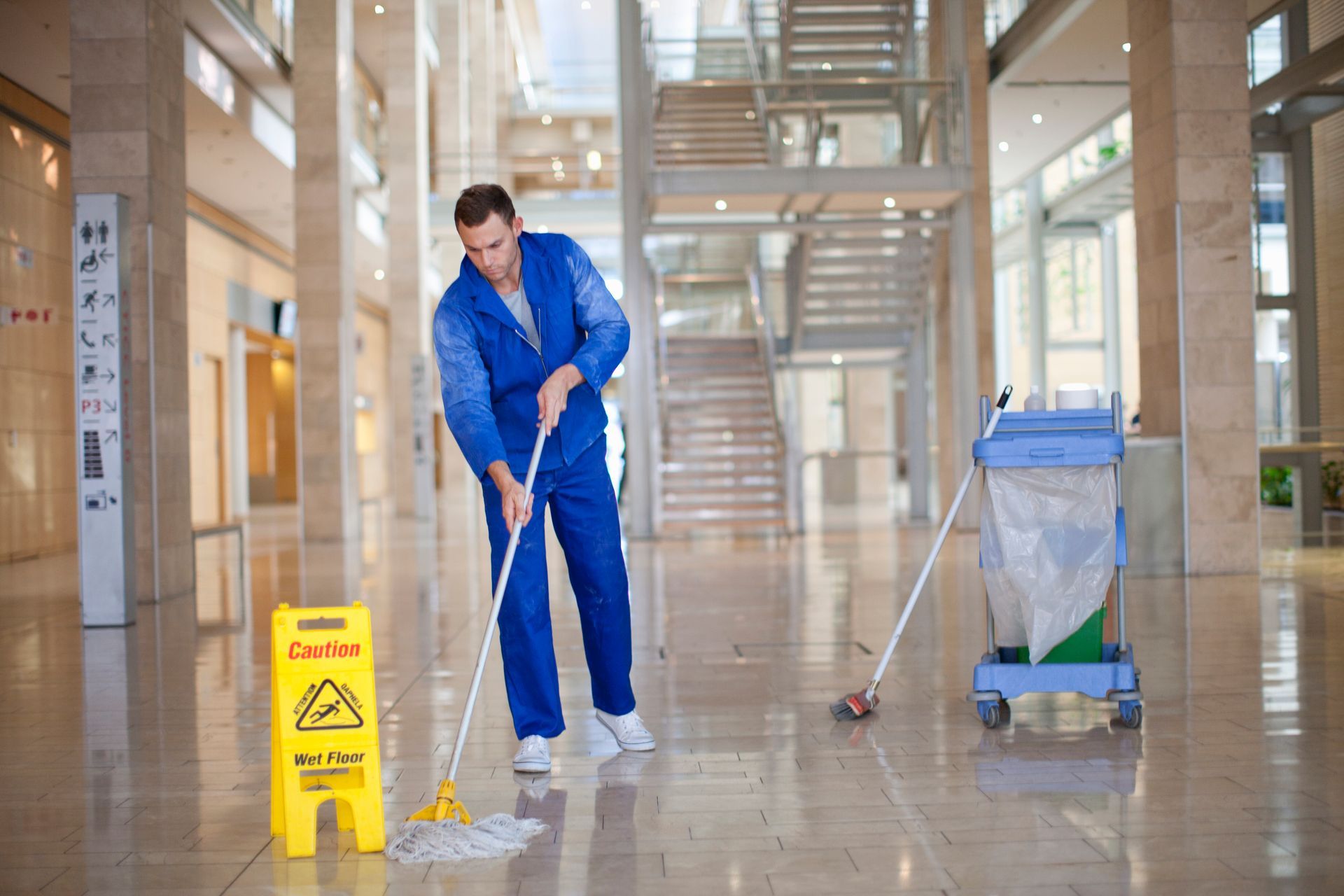
The Office Cleaning Checklist for Athens, GA Businesses (Or: Why the Yogurt Is Plotting Against You)

Somewhere in your office right now, a yogurt is plotting something.
You don't know where. Maybe the back of the break room refrigerator, where it has been since the Obama administration. Maybe in a desk drawer, next to a stapler and a single, mysterious sock. But the yogurt is out there, and it has had time to think.
This is why you need an office cleaning checklist. Not because cleaning is fun (it isn't), and not because your office is dirty (it's probably fine, mostly). You need one because an office left to its own devices doesn't stay neutral. It slowly becomes a swamp. Athens-area businesses already live near a lot of kudzu. You do not need to grow your own indoors.
Here is a practical way to keep shared spaces, workstations, restrooms, and floors from being overlooked. One warning first: this checklist is a planning aid, not a universal schedule. Every office is different, and I am not a professional, unless you count my professional career of being a person who once lost a fight with a vacuum cleaner. (The vacuum is fine. I am not.)
1. Start by Assessing Your Office
Before you write a single checklist item, walk around your building and look at it the way a health inspector would, or a toddler, or a toddler who is a health inspector.
Ask yourself which areas need routine attention. For most offices, the list looks something like this:
- Reception and meeting areas
- Workstations
- Kitchens and break rooms
- Restrooms
- Floors, which are everywhere, like the Internet
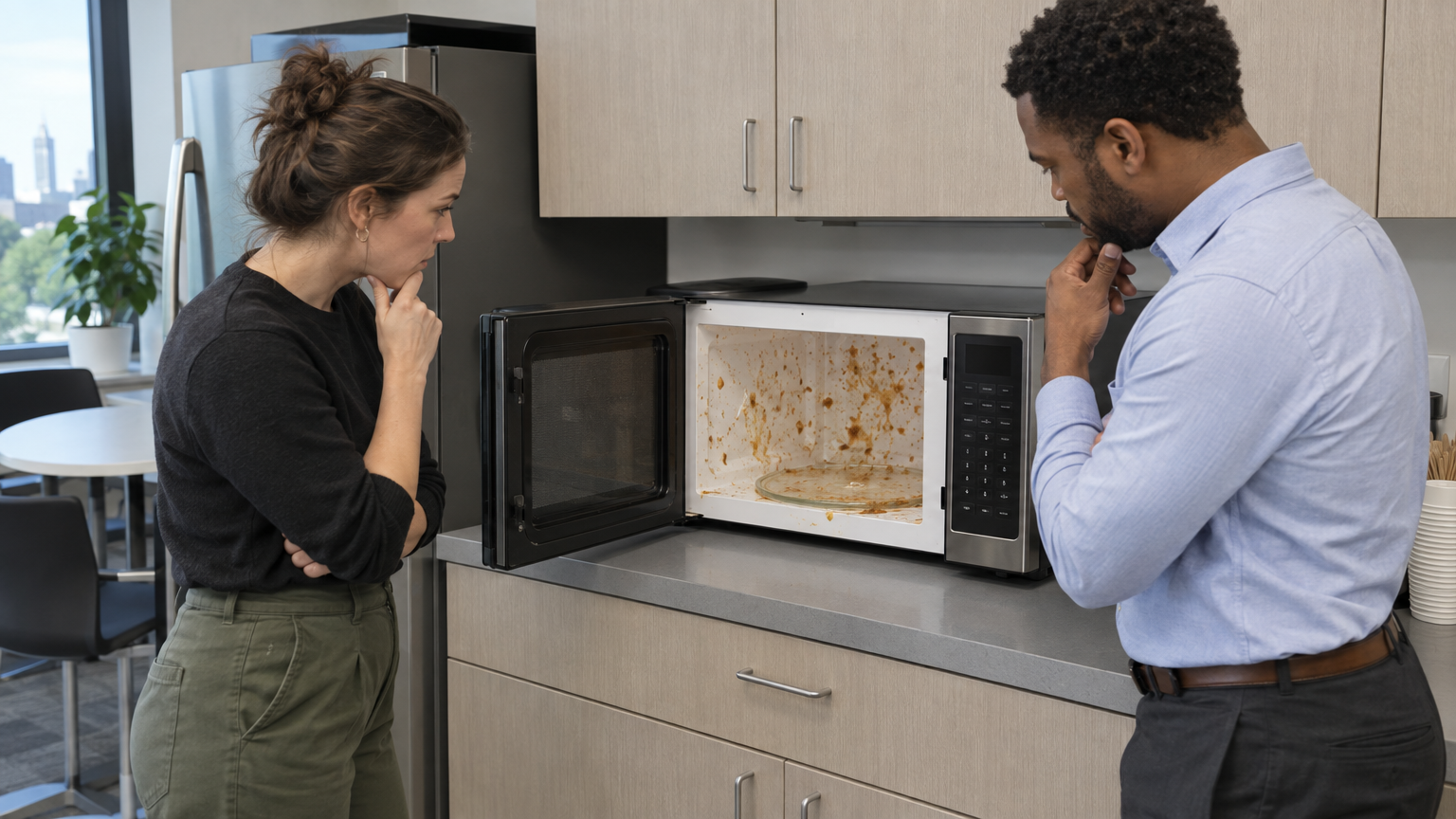
Then ask how many people use each area, and how often. A conference room used twice a month has different needs than a break room used by 40 people who all believe the microwave is self-cleaning. (It isn't. I checked. It was the worst afternoon of my life.)
Also think about anything specific to your business. A dental office, a print shop, and an accounting firm each have surfaces and spaces that matter in their own way. Your office cleaning schedule should reflect what actually happens in your building, not what a poster in a stock photo says should happen.
Finally, write it down. Put responsibilities and recurring tasks on paper, or at least in a spreadsheet, so everyone knows who is doing what. Without this step, here is how the conversation goes:
EMPLOYEE 1: I thought you were cleaning the break room.
EMPLOYEE 2: I thought you were cleaning the break room.
THE BREAK ROOM: (growing)
2. The Daily Office Cleaning Checklist
According to a study I am making up right now, the average office accumulates 4,312 pieces of visible trash per business day, 61 percent of which are single sugar packets that someone opened and then abandoned like a tiny, sweet crime scene. The daily checklist is how you fight back.
"Daily" here doesn't mean every task gets identical attention in every office. It means the frequency that fits how your space is actually used. Adapt as needed. Here's the starting point:
Shared and high-use areas
- Remove visible rubbish.
- Tidy common areas.
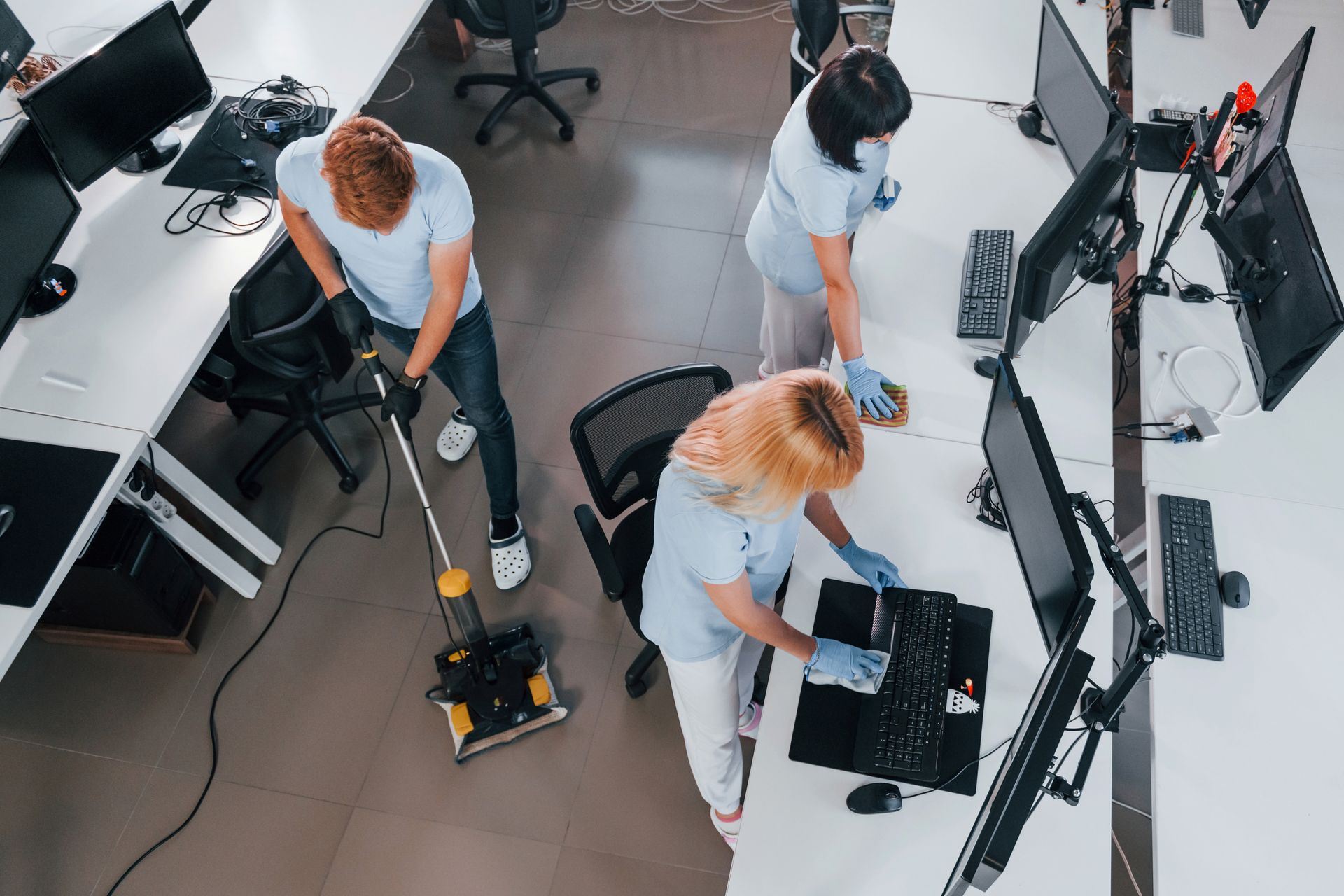
- Clean frequently touched surfaces as appropriate, such as door handles, light switches, and that one copier button everybody presses with maximum anger.
Workstations and meeting rooms
- Address visible dust and marks.
- Clear and clean shared tables and other common-use surfaces. You'd be amazed at what a conference table can hold after a lunch meeting. Archaeologists would call it a "layer."
Restrooms
- Check and clean fixtures and surfaces.
- Restock supplies where that's part of your routine.
- Address visible floor debris.
Nobody ever compliments a clean office restroom. But they will remember a bad one for the rest of their lives, and probably tell their spouse.
Break rooms
- Clean shared counters and tables.
- Manage the rubbish.
- Check the sinks and floors.
Entryways and walkways
- Remove visible dirt and debris.
- Keep heavily used paths presentable.
Your entryway is the first thing clients see, so it should say "professional, organized business," not "we recently hosted a mud wrestling tournament." If you work in the Classic City, the Georgia red clay will find your carpet. It's like a golden retriever that wants to be your friend, only it's dirt.
3. The Weekly Office Cleaning Checklist
The daily list handles the things you can see. The weekly list handles the things that are patiently waiting for you to stop looking.
Once a week, consider these:
- Dust the reachable surfaces that don't need daily attention. Shelves, window sills, the tops of monitors. Dust is the only thing in your office that never calls in sick.
- Give extra attention to corners, edges, and less-used areas. Dirt loves a corner. It's the real estate market of grime.
- Clean interior glass and shared surfaces as appropriate for your space.
- Vacuum or otherwise clean the carpeted areas more thoroughly than the quick spot attention you give them during the week.
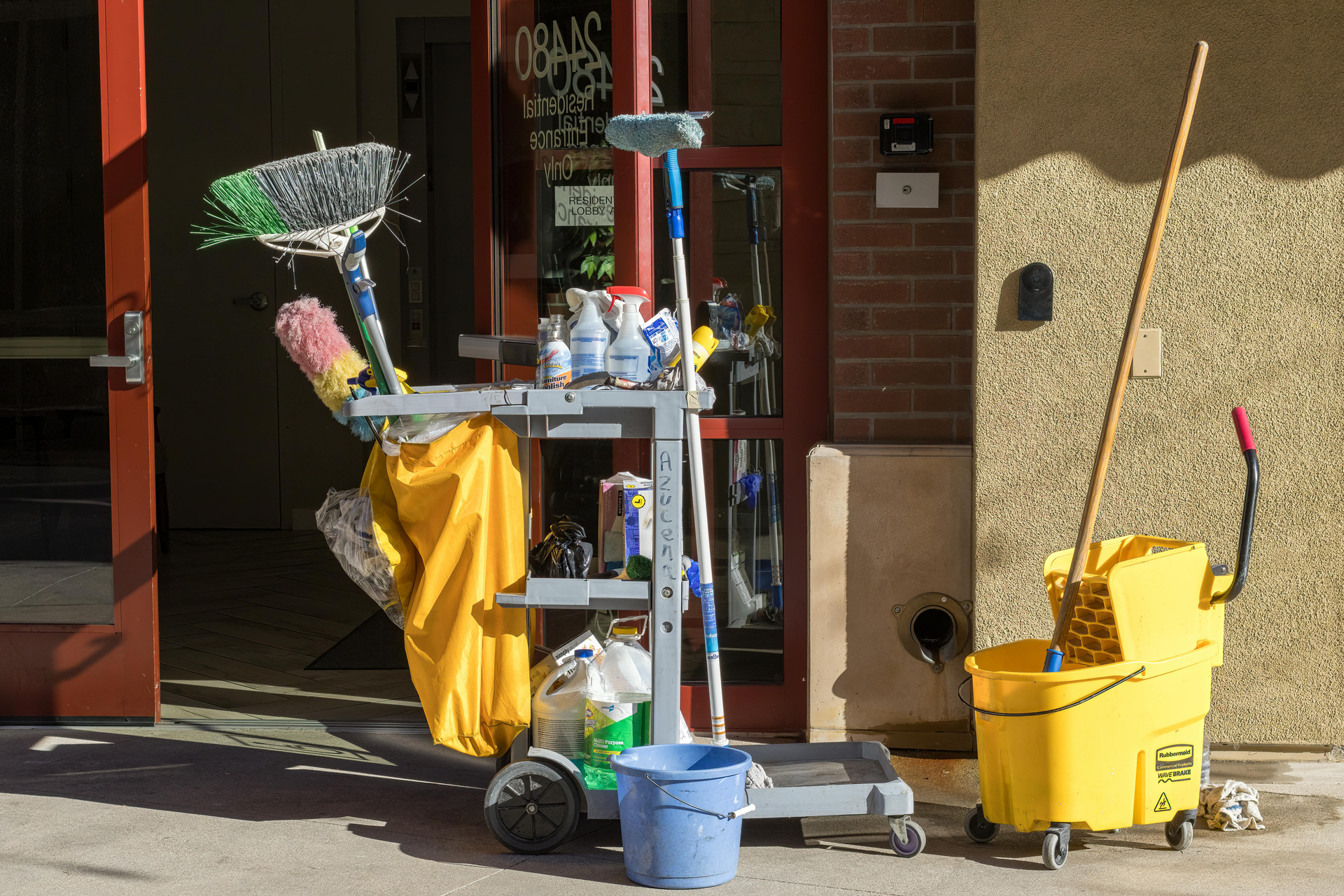
- Address hard floors with a method suited to the floor type. Do not, under any circumstances, take a guess, a mop, and a dream into a hardwood lobby. (I did that once. Nobody was injured, but the floor and I are no longer on speaking terms.)
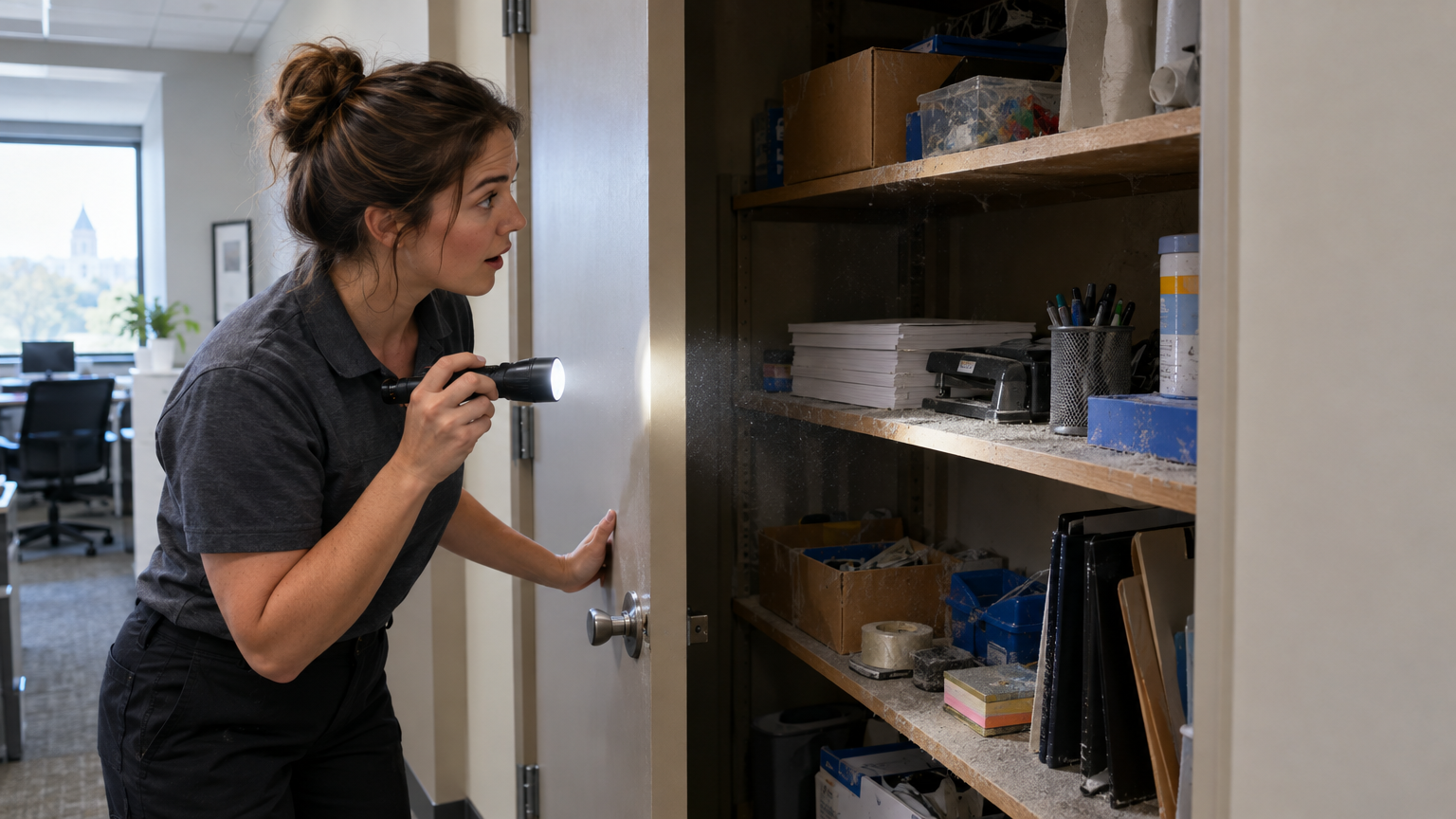
- Check meeting rooms, storage areas, and other spaces that get skipped in the daily rush. Every office has a supply closet that nobody has opened since the Clinton years. Open it. Bring a flashlight and a friend.
The right frequency depends on traffic and site conditions. A busy front desk in downtown Athens may need more attention than a quiet back office. Use your own judgment, and when in doubt, trust your nose. Noses don't lie. They just judge.
4. Periodic and Deep-Cleaning Tasks
Routine upkeep is brushing your teeth. Periodic cleaning is going to the dentist. One keeps things from getting worse; the other deals with what building up over time.
Periodic tasks might include deeper attention to:
- Carpets, which collect more than you'd think and hold onto all of it like a grudge
- Hard floors, especially where buildup collects along edges and high-traffic lanes
- Areas that accumulate residue, which is a polite word for "wherever the dirt has been holding meetings"
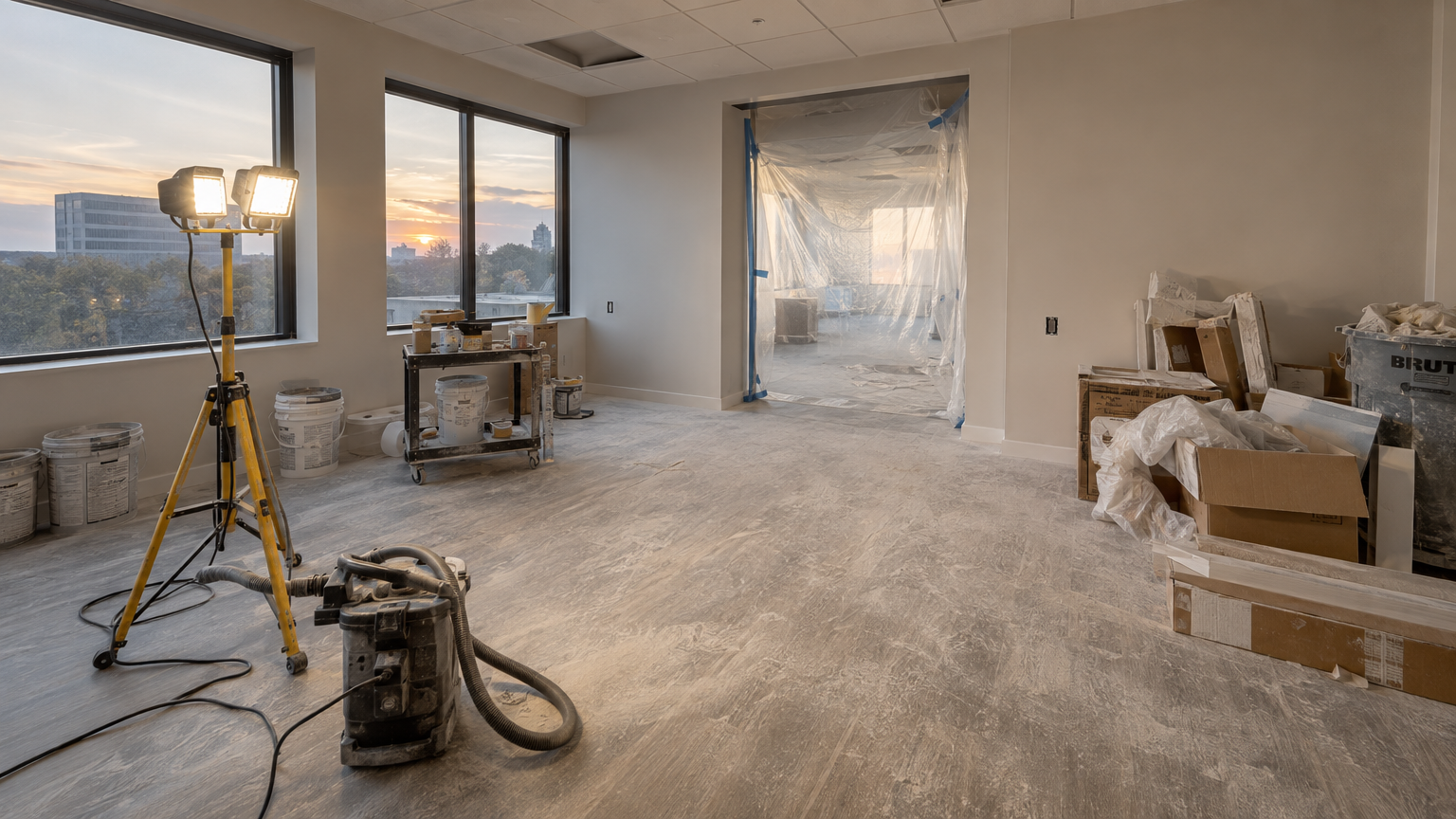
If your business has recently finished a renovation or construction project, you may also need post-construction cleanup. This applies only if you actually had a project. If you did not renovate and you're sitting on drywall dust, that is a different problem, and one I'd like to hear more about.
The best approach is to plan these tasks around your facility's needs and the actual condition of your surfaces, not around a calendar someone made up. For specifics on what's involved, check C&C Janitorial's commercial cleaning and floor and carpet care service pages (link once URLs are confirmed), where the details live instead of in my imagination.

5. Adjust the Checklist for Your Type of Workplace
Not all workplaces are the same, which is why a checklist that works for a law office could be disastrous for a machine shop, a medical facility, or a day care that contains 31 small humans and a lot of glitter.
(Glitter, by the way, is not a craft supply. It is a permanent resident. Once it enters a building, it files for citizenship.)
Cleaning priorities can differ a lot depending on what your space is used for. Managers should consider:
- How the room is used
- What surface types are involved
- How much foot traffic it gets
- Any site-specific requirements that apply
I'll be honest: this is the part where I'm supposed to give you official regulatory and infection-control advice. I'm not going to. I'm a humor writer. If I tried to explain medical facility standards, the only guaranteed result would be a lawsuit and a very tense email from my editor. If your workplace has specific requirements, get them from the people who actually know them. Then build your checklist around them.
That's the real value of commercial cleaning services that understand different types of facilities. They know the difference between an office and an industrial space, which is more than I can say for my own garage.
6. How to Keep the Schedule Consistent
Creating a checklist is easy. Following it for more than three weeks is the hard part. I know this because every New Year's resolution I have ever made has lasted roughly as long as a doughnut in a break room.
Here are some ways to make it stick:
- Assign ownership. Decide who handles what. "Everyone" is not a person. "Someone" is not a person. "Not me" is, sadly, the most popular person in any office.
- Keep a simple recurring checklist or log. A clipboard works. A shared spreadsheet works. A tattoo is probably too much.
- Review the plan when things change. New hires, new floor plan, new layout, a surprise client meeting where the CEO's dog attends. Any of these can change what your office needs.
- Separate what you handle in-house from what you might hand off. Some tasks are fine to do yourself. Others, like floor care, may be better left to people with equipment that doesn't look like it came from a yard sale.
Here's the sincere part, and I'll keep it short. A clean workplace matters to the people in it. It affects how they feel when they walk in on a Monday, and how a visitor feels about your business in the first ten seconds. That's not a joke. It's just true.
7. When to Consider Professional Office Cleaning
At some point, many businesses find that the routine has gotten hard to maintain. Maybe staff is stretched thin. Maybe the floors need more attention than a hallway mop can provide. Maybe the facility needs a broader plan than a laminated checklist taped to a refrigerator.
That's when professional janitorial services make sense. When comparing providers, look at:
- Scope of work: What is actually included?
- Schedule: Does it match when your office is used?
- Facility needs: Do they understand your type of space?
- Communication: Will someone answer the phone, or will you be talking to a voicemail that sounds like it's been in the break room refrigerator since Obama?
C&C Janitorial offers commercial cleaning as well as floor and carpet services for commercial cleaning Athens GA businesses. If you're curious about how that works for your building, we'd be glad to talk it over.
The Last Word
A good office cleaning checklist isn't about perfection. It's about a routine that matches your actual office, so the yogurt never gets the chance to organize.
If your Athens-area business is ready to take a look at office cleaning Athens GA options, explore C&C Janitorial's commercial cleaning services or request more information.
We'll bring the supplies. You bring the yogurt.
Check out some of our other blog posts...