The Pen in Your Waiting Room Has Met 41 People Since Tuesday: Medical and Dental Office Cleaning in Athens, GA
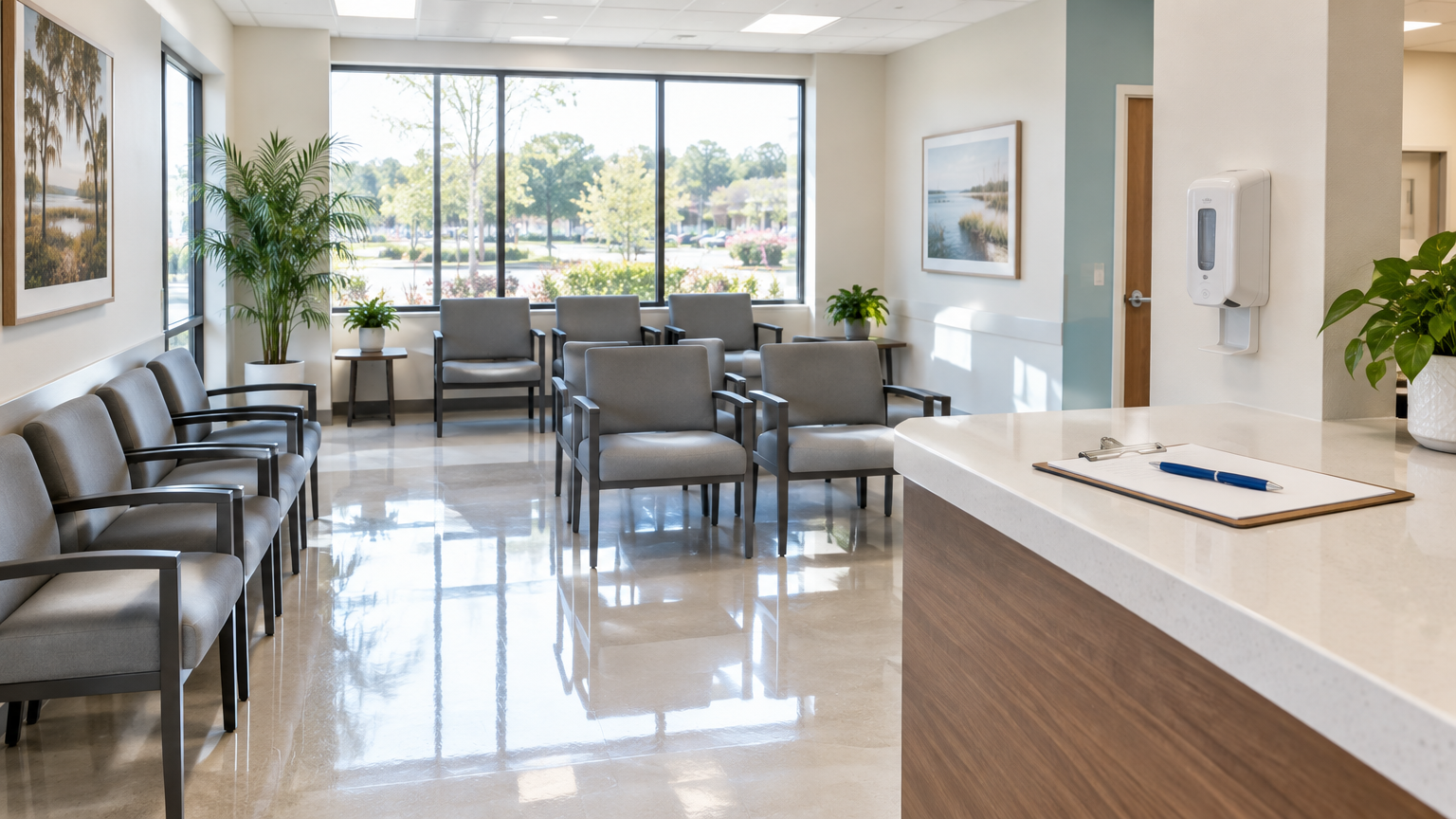
Somewhere in your waiting room right now, there is a pen. It has been touched by 41 people since Tuesday. One of them sneezed into his hand first. Another one is, as we speak, filling out a clipboard form with a pen that was in somebody's mouth. I am not making this up. I once watched a man chew on a practice's pen the way a beaver chews on a dam, and then hand it back to the receptionist, who said, "Thank you!"
That pen is why you need to think about medical office cleaning in Athens, GA. This post is for practice managers, office managers, and dental practice owners who want to know what "healthcare-grade" cleaning actually means, how often exam rooms need disinfecting, and how to tell whether your current janitorial service knows the difference between a doctor's office and a dentist's office. I do not have a medical degree. I do not have a dental degree. I have a library card that I'm pretty sure expired in 2011. But C&C Janitorial cleans medical and dental offices around Athens for a living, and I have read their notes very carefully.
Why Medical and Dental Offices Need More Than Standard Commercial Cleaning
Here is the difference between healthcare cleaning and commercial cleaning. When a regular office gets dirty, somebody's lunch is in the wrong place. When a medical office gets dirty, somebody's lunch is not the problem, because the people in the building are already there because they feel terrible.
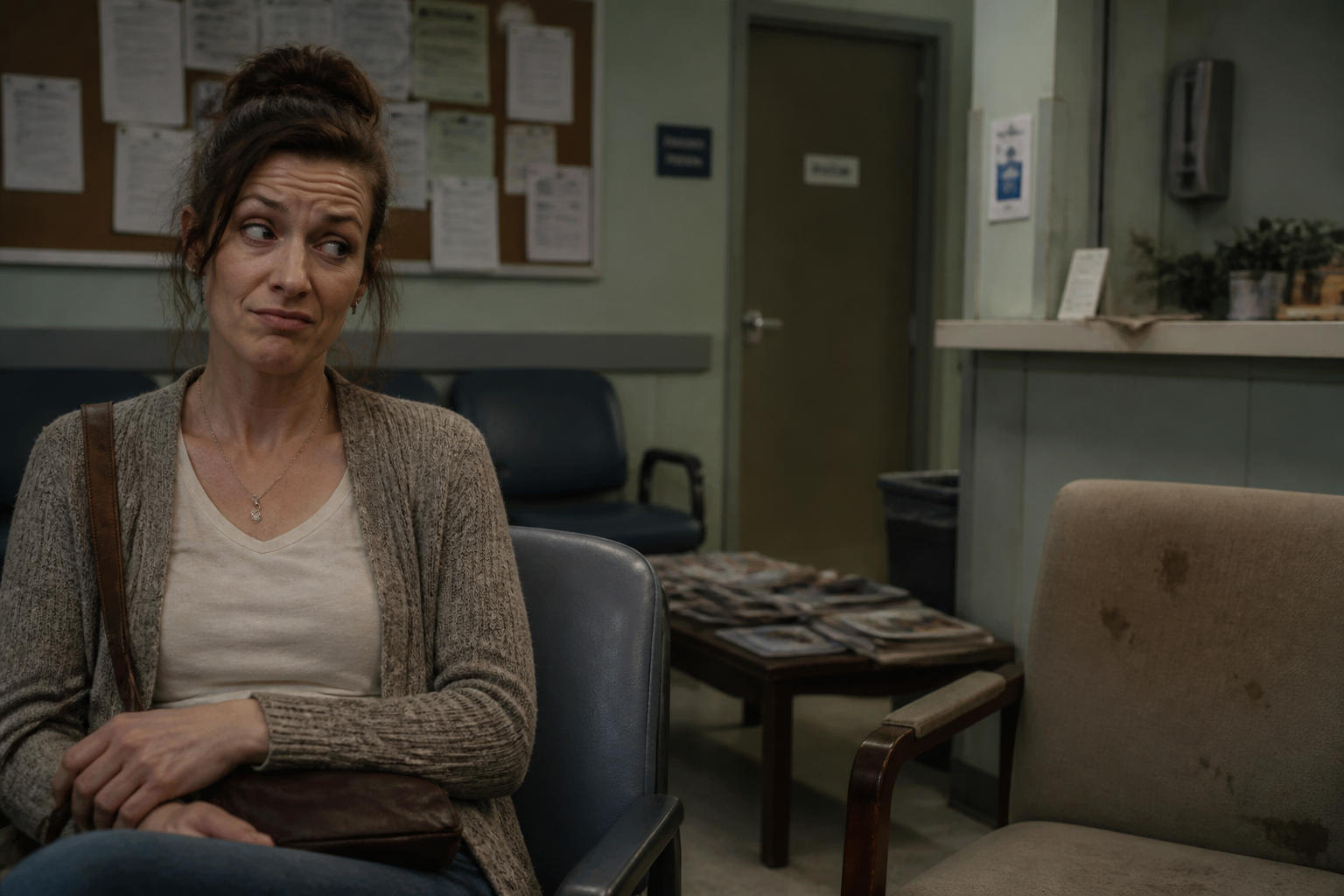
A regular office has employees who are, statistically speaking, mostly healthy and mostly pretending to work. A medical office has a continuous stream of people with coughs, rashes, fevers, and the particular look of someone who Googled their symptoms at 2 a.m. and now believes they have only days to live. They sit in the same chairs. They touch the same doorknobs. They use the same restroom, which we will discuss later, because I need a moment.
So the cleaning has to be different. It has to be documented, repeatable, and done the same way every time, not "whenever Gary gets around to it." (Gary is a name I just made up, but if you have a Gary, you know.)
The CDC publishes guidelines for environmental infection control in health-care facilities, and the big idea is simple: surfaces matter, and a healthcare space needs a real process behind its cleaning, not good intentions and a spray bottle. Your cleaning vendor should be able to explain theirs without sweating.
What Patients Notice First (and Why It Matters)
Patients cannot see germs. This is the great tragedy of microbiology. If germs came in neon green, your cleaning problems would be over by Thursday.
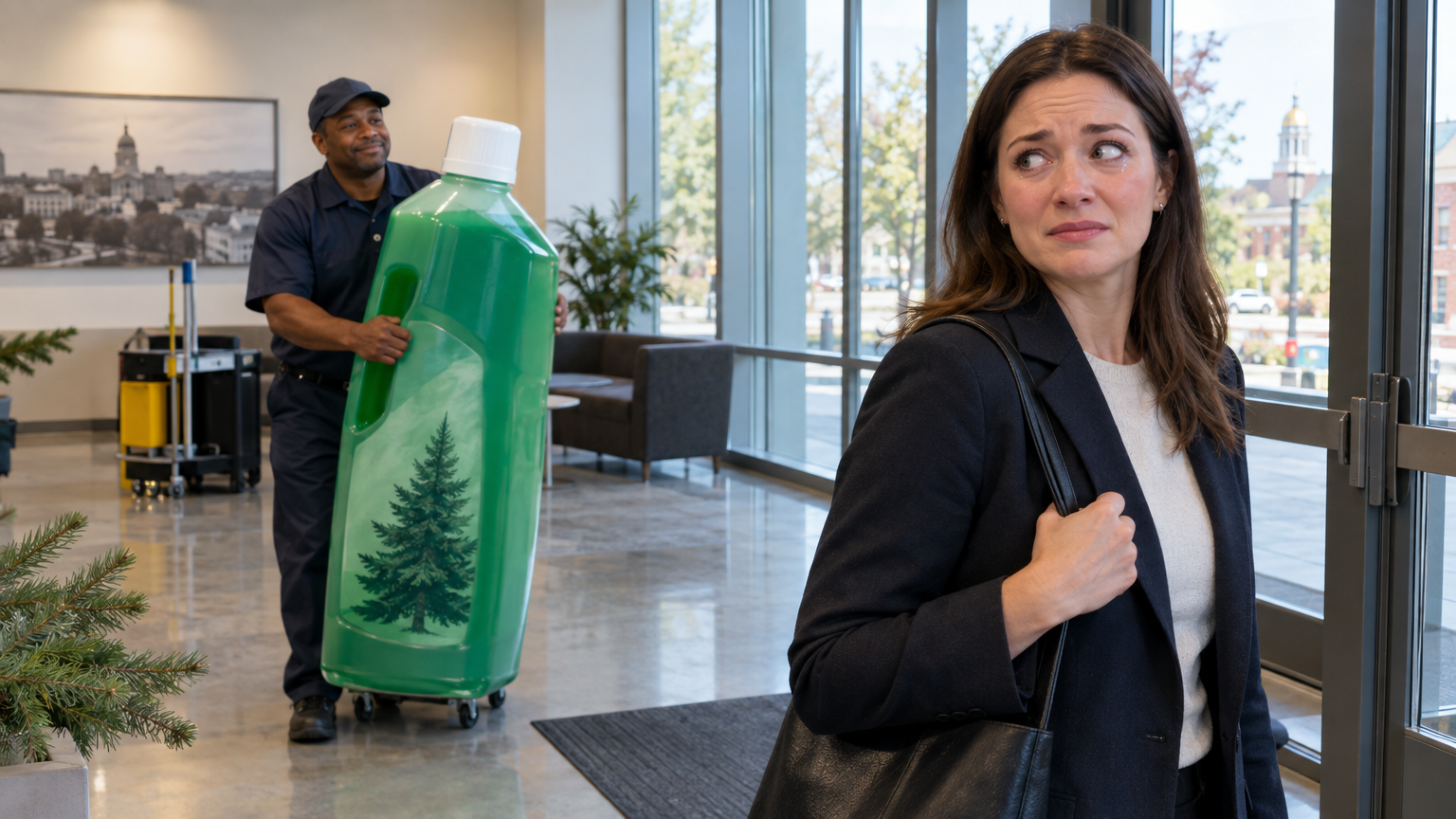
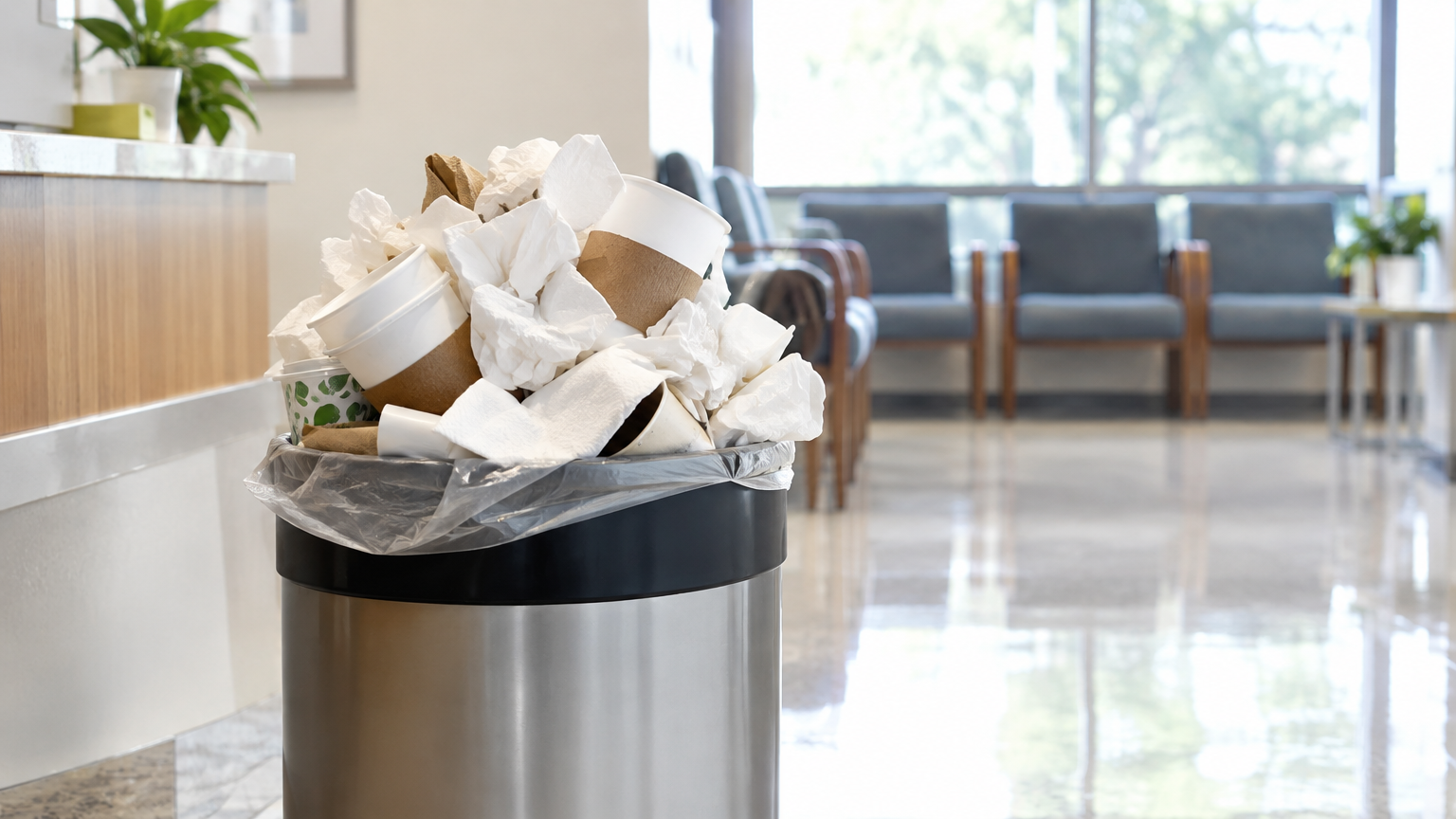
What patients can see is everything else. Within about eleven seconds of walking in (a figure I invented, but you know it's about right), they have judged your practice based on the waiting room, the front desk, the restroom, and the doorway to the treatment room. Streaky glass. A sticky armrest. A trash can that has achieved a sort of sculptural fullness. That's what they notice.
And here's the part that matters: they conclude things. "If the lobby looks like this," they think, "what is going on in the back where they put the sharp objects?" Whether that's fair or not, it's the verdict. Nobody has ever left a practice and said, "The care was excellent, but I'm furious that the floors were so spotless."
So visible cleanliness is about trust, and trust is about keeping patients. A clean waiting room won't heal anybody. But a dirty one has been known to make a patient quietly decide they're going to a different practice, which, depending on your business model, is also a kind of illness.
Infection Control Basics for Clinical Spaces
Okay. Deep breath. We are going to get a little serious here, and I'll try to keep the jokes to a level that won't upset an auditor.
Exam and treatment rooms get cleaned and disinfected between patients. Not at the end of the week. Not "when we think of it." Between patients. The room is a revolving door of human beings, and the last person's germs should not be a gift to the next person.
Use EPA-registered disinfectants, and respect the dwell time. This is the one most people get wrong, so pay attention. Every disinfectant has a label, and that label says the surface has to stay wet for a certain amount of time for the product to actually work. This is called contact time, or dwell time. It is not "spray and wipe in the same motion like you're angry at the counter." If you wipe it off in two seconds and the label says several minutes, you have not disinfected anything. You have merely moved the germs around, like a teenager "cleaning" a bedroom.
I'm not going to give you a number here, because it varies by product, and the label on your actual bottle is the authority. Read it. It's the only time in your life a label will tell you something useful and not try to sell you a wellness retreat.
Hit the high-touch surfaces. Here's your list:
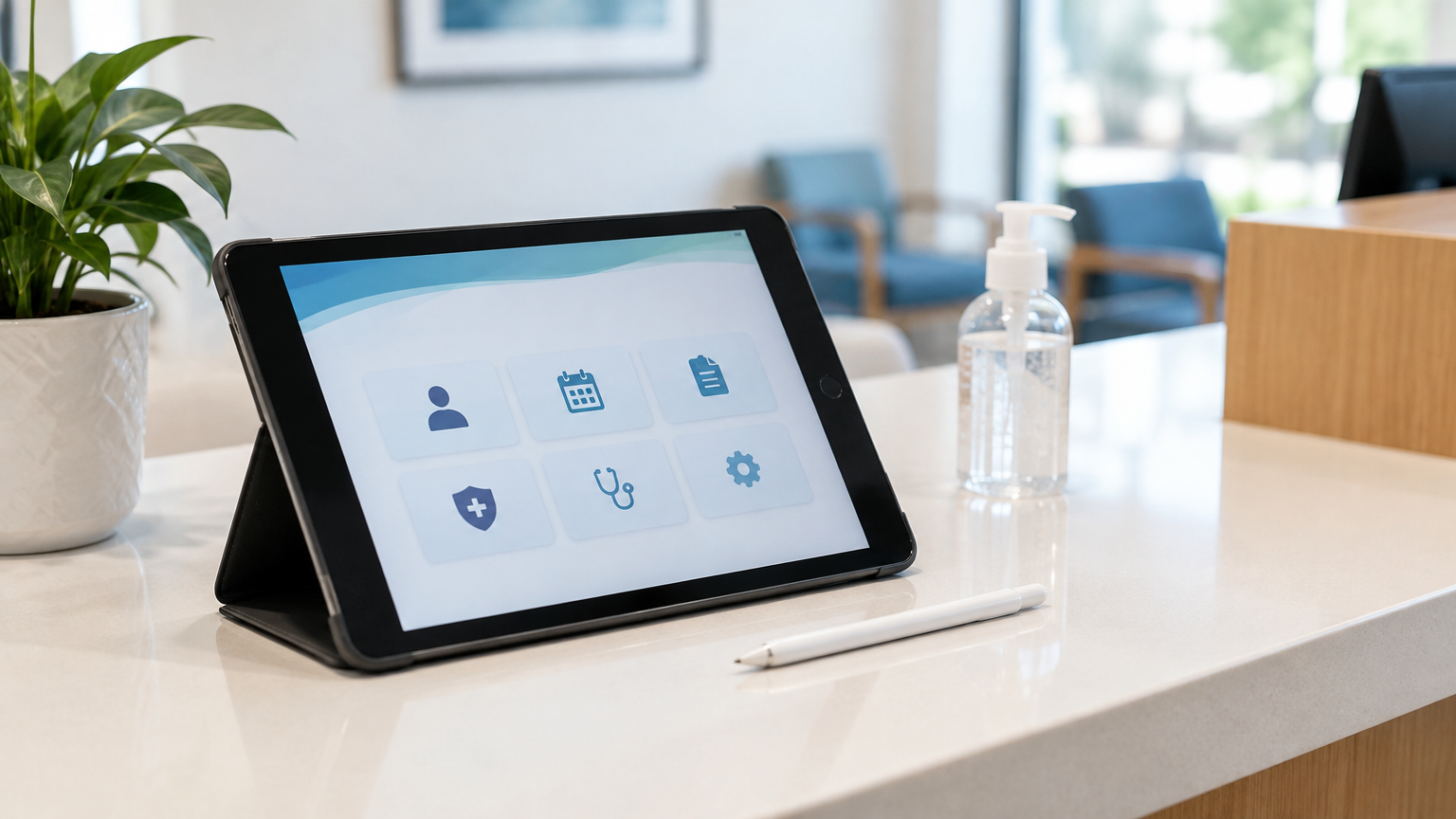
1. Check-in screens and tablets
2. Pens (see: the beaver man)
3. Door handles
4. Light switches
5. Chair armrests
6. Faucet handles
7. Equipment surfaces, as appropriate to your practice
Notice what these have in common. They are the things everyone touches and nobody thinks about. They are the Taylor Swift of germ transmission. (Everybody has been in contact with them.)
How Often Each Area Should Be Cleaned
Here is the part you can screenshot and tape to the break room wall, right next to the sign about washing your mug.
Exam rooms: between patients.
Waiting areas: during operating hours. Yes, during. Someone needs to wipe the chairs while patients are there, which is slightly awkward, like being vacuumed at a restaurant, but it works.
Restrooms: at least daily, and more often in a busy practice. If your restroom has been described by a patient as "an experience," go to hourly.
Staff areas: daily.
Floors in patient-care areas: daily.
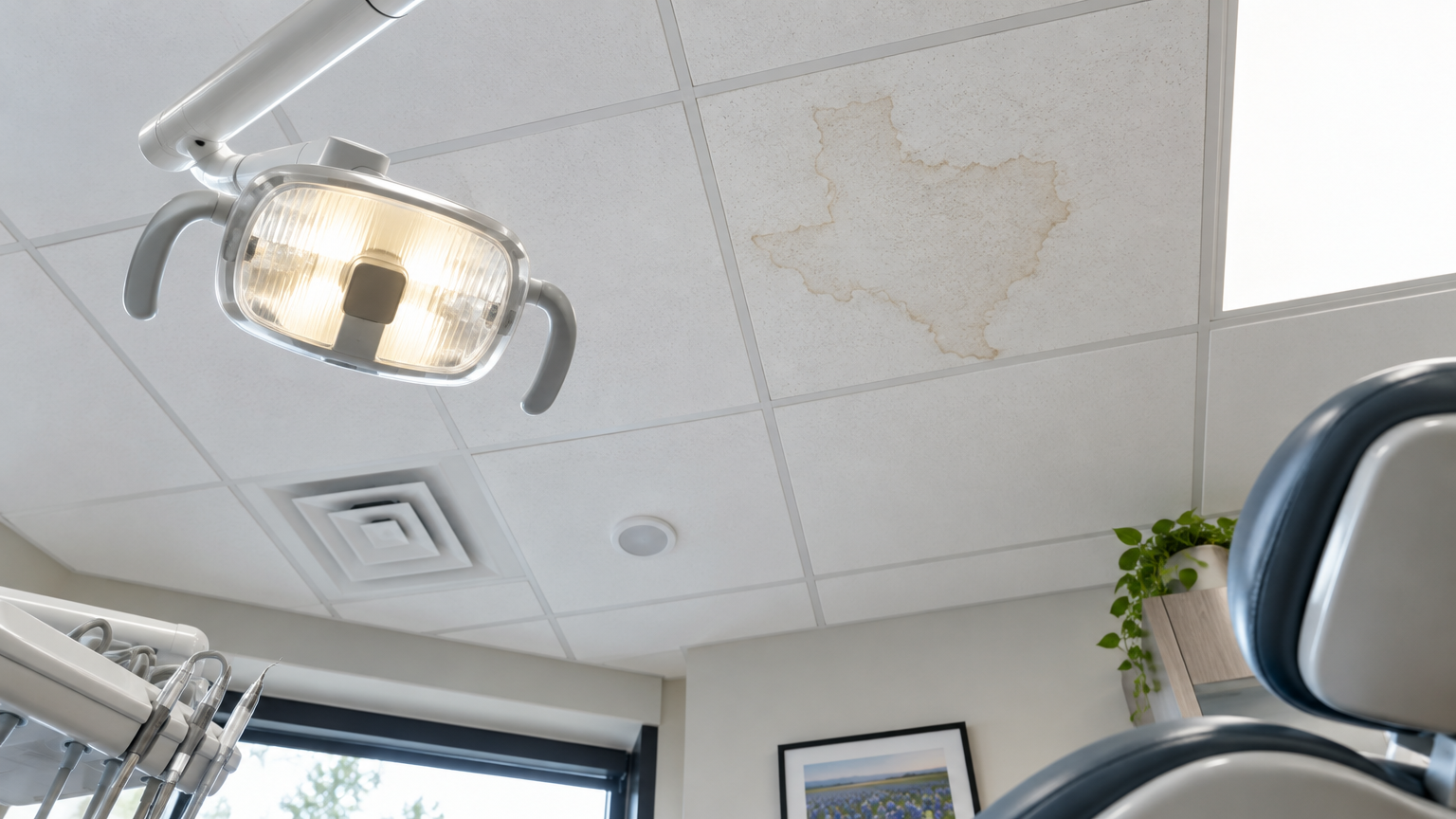
Walls and ceilings: periodically. Nobody has ever been made sick by a ceiling, but a ceiling tile with a stain shaped like the state of Ohio does nothing for your reputation.
Now, a serious moment. These frequencies are a starting point, not scripture. The right schedule depends on the size of your practice, your state's rules, and any accreditation requirements you have to meet. A busy pediatric clinic in flu season is a different animal from a small specialist who sees six patients a day. Ask your vendor to build a schedule around your office, not a generic one pulled off the internet.
Dental Offices: Specific Considerations
If you run a dental practice, you have a special challenge, which is that your patients are lying down with their mouths open, staring at your ceiling. They have a lot of time to think. They will notice everything. I have personally spent a 40-minute root canal memorizing the pattern of a ceiling tile, and I can tell you that if it had been dirty, I would have mentioned it, probably in an online review.
Dental offices have operatories, chair and unit surfaces, shared equipment, and sterilization areas. Here's the key point: the sterilization area and the clinical equipment are handled by your clinical staff, who are trained for it. A janitorial team cleans around them. That is a good thing. You do not want your janitor operating the autoclave. You do not want me operating the autoclave.
What a good janitorial service for a dental office does handle is the reception area, the waiting room, restrooms, floors, and general surfaces. The same dental office cleaning in Athens, GA that keeps the front desk gleaming also keeps the floors in the hallway from turning into a topographical map of everything anyone ever tracked in.
Here's the question every practice should answer in writing: which tasks belong to your clinical staff, and which belong to the janitorial vendor? If you don't know, you are running a practice on the honor system. Somebody assumes somebody else wiped the thing. Nobody wiped the thing.
What to Look for in a Medical or Dental Cleaning Provider
When you're interviewing a cleaning company, bring a skeptical face. Ask these questions, and then watch their reaction:
1. Do they have healthcare-specific training and written protocols? If their answer is "we're really thorough," that is not a protocol. That is a personality.
2. Do they use EPA-registered products and a documented dwell-time process? If they look at you the way a golden retriever looks at a calculator, keep looking.
3. Can they give you a cleaning schedule, checklists, and inspection records? A real provider can show you paper. Or a screen. Or smoke signals, if documented.
4. Do they do background checks on staff and use PPE where appropriate? These people are going to be in your building, near your records, after hours. Ask.
5. Are they local and responsive? If something goes wrong on a Monday morning in Athens, you want somebody who can get there that day, not somebody who has to file a ticket with a regional office in another time zone.
And one more thing. A trustworthy vendor will tell you what they can't promise. If a company claims certifications or guarantees they can't document, run. A good provider tells you plainly what they do, shows you the proof, and doesn't oversell. That's not a sales tactic. It's the opposite, which is why you should believe it.
Common Questions About Medical and Dental Office Cleaning in Athens
Q. How often should exam rooms be disinfected?
A. Between patients. Next question.
Q. Is a general janitorial service enough for a dental office?
A. It depends on whether the general janitorial service knows what a dwell time is. If it asks you, "Is that a kind of dance?" the answer is no.
Q. What should be cleaned between patients versus at the end of the day?
A. Between patients: exam and treatment room surfaces, the stuff that touched the patient. End of day: floors, restrooms, trash, and the broader building. Your clinical team and your janitorial team should know exactly who does which.
Q. How do I know if a vendor is qualified for a healthcare setting?
A. See the section above. They should be able to show you protocols, products, schedules, and records. If they can only show you a van with a nice logo, that's a van.
Q. Seriously, how often should exam rooms be disinfected?
A. Between patients. I told you.
Next Steps for Your Practice
Here is a short audit you can do this week, with a clipboard and the pen you are now going to look at differently:
• Is there a written cleaning schedule for every area?
• Do you know who is responsible for exam rooms versus end-of-day cleaning?
• Does your vendor use EPA-registered products and follow the label's dwell time?
• Can you see inspection records or checklists?
• Would you be comfortable showing all of the above to a patient, an inspector, or your mother?
If you answered "no" to more than two, it's time for a conversation. C&C Janitorial offers medical and dental office cleaning across Athens and the surrounding communities, and they'll walk through your space with you and give you a quote, no hard sell required.
And somebody please replace that pen.
Check out some of our other blog posts...
The Office Cleaning Checklist for Athens, GA Businesses (Or: Why the Yogurt Is Plotting Against You)